The Thorny Grace of It: And Other Essays for Imperfect Catholics by Brian Doyle
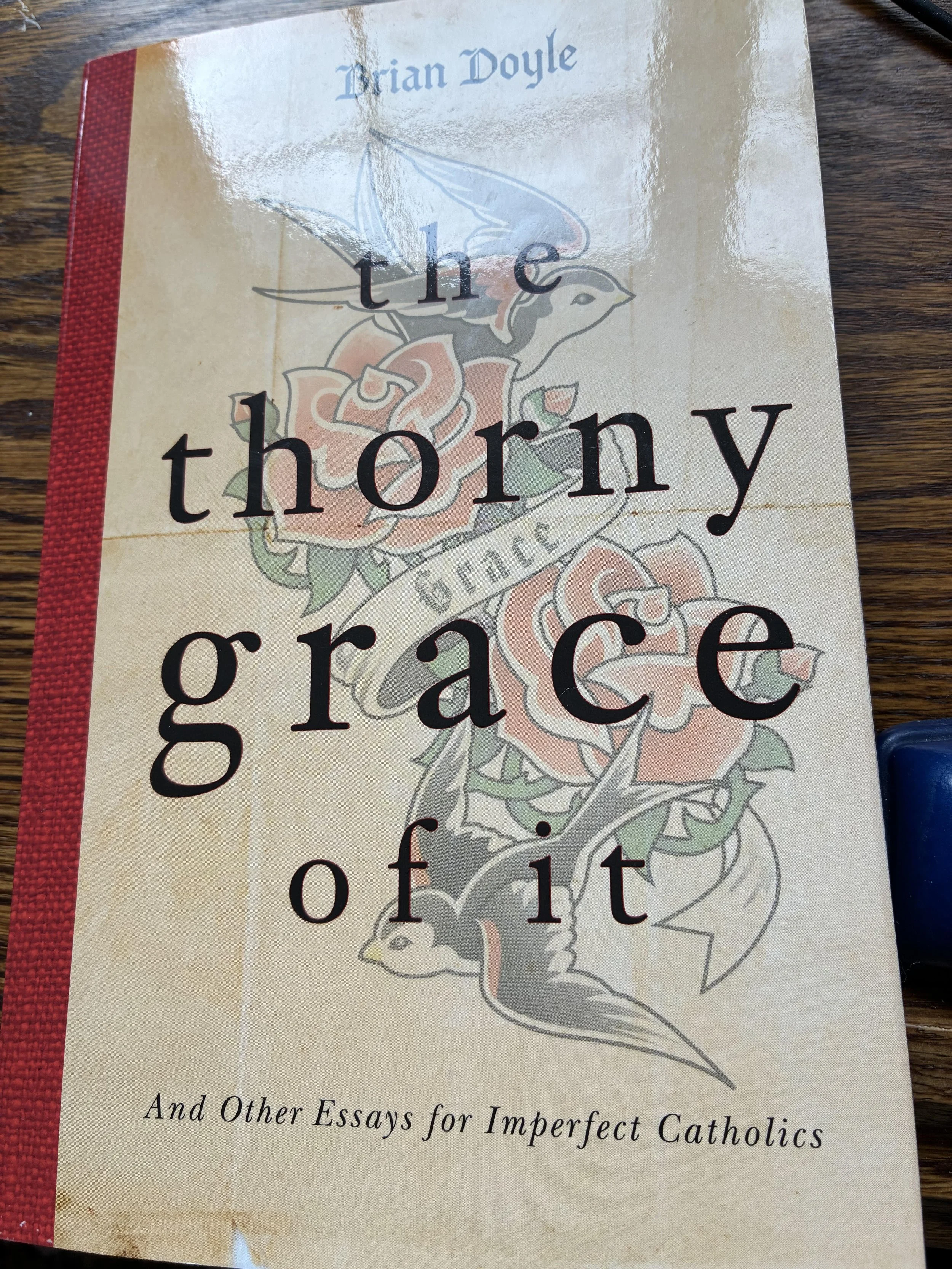
The Thorny Grace of It: And Other Essays for Imperfect Catholics - 5*
Brian Doyle
I love Brian Doyle! I have read many of his books and essays, and have marked more in Amazon and the library to read later. I noticed recently, though, that the prices are going up. I think his books are starting to go out of print because he died in 2017. It makes me sad he is gone, but I am thankful he was such a prolific writer during his lifetime.
His writing reminds me of Billy Collins. Their styles are different: Doyle does not write poetry (although sometimes he writes what he calls “proems,” prose that comes close to poetry), but both write with humor and are down-to-earth, straight shooters.
You can see the subtitle on this book says it is “for imperfect Catholics.” I am an imperfect Protestant, and it is for me, too. Doyle was a lifelong Catholic. Isn’t the title good? The Thorny Grace of It. The title essay consists mostly of a list of all the imperfect things (I guess that’s as good a way as any to label them) that made me smile just to read them. Here’s a sample:
The kids are surly and rude and vulgar and selfish and their feet smell so awful your eyes burn if you are trapped in a confined space with their empty sneakers or both of those horrors at once, which happens. Your spouse can be testy and snappish and unfair and inconsistent and obsessed with finances and so liable to mood swings you have more than once considered erecting a barometer in the kitchen…The dog has barfed in every room in the house. The house is mortgaged until the day Jesus Blessed Christ returns in His Radiant Glory to resolve all mortgage payments and carry us home to His house…The rain it does not cease nor does it falter. (pages 115-116)
It goes on from there with galloping hilarity, and heartbreak, too:
My wife and I lost a child, a being unlike any other that ever was or will be, and I will not meet her or him until Jesus Blessed Christ leads me to her or him by the hand and we embrace, weeping. There is so much pain and loss and suffering and fear and helplessness and greed and violence that sometimes I lay abed and feel naught but a great despair, and cannot see how to go on.
Then, the pivot, the turn toward God, like a poem or a psalm:
But then I arise, because I know there are laughter and compassion, and creativity and wonder, and kindness and generosity beyond measure, and I know we are the tools and means by which light pierces the darkness. I know, as well and truly and deeply as I know anything at all, that the thorny grace of it is the shape and nature of its holiness.
How lovely and wonderful is that?
This is only a foretaste of the delight, the tenderness, the joy, and full-heartedness you will receive from these essays.