The Ferryman and His Wife by Frode Grytten, Translated by Alison McCullough
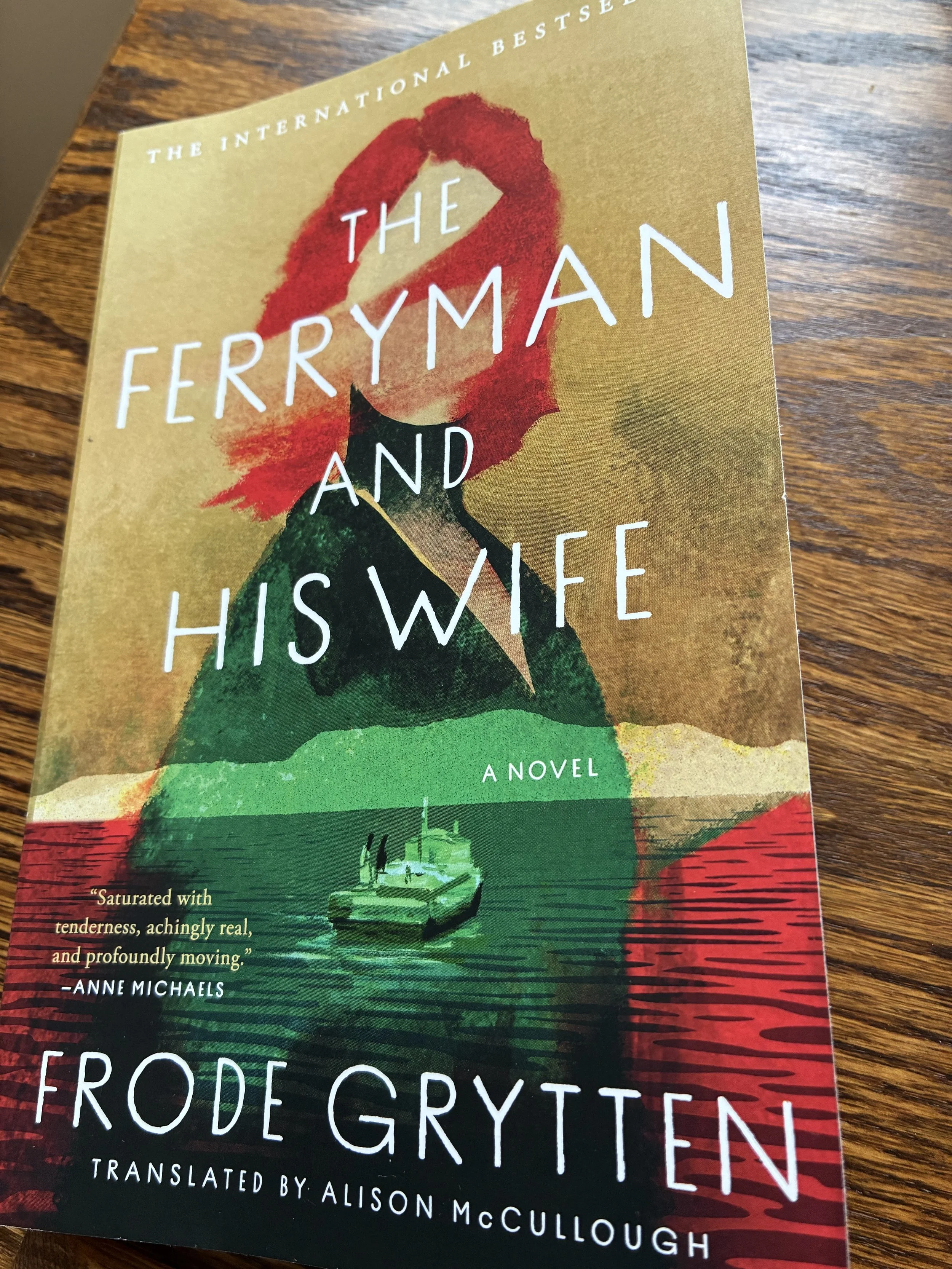
The Ferryman and His Wife - 5*
Frode Grytten (This link is to a beautiful article written by the author about growing up in Norway.)
Translated by Alison McCullough
I loved this book! I doubt I’d have even heard of it if it weren’t a book club choice. I’m so glad I did.
The book begins:
At a quarter past five in the morning Nils Vik opened his eyes, and the last day of his life began. —page 1
Nils was a ferryman in Norway, driving a ferry boat up and down the fjords. (The book was originally written in Norwegian.) The entire book (it’s only 166 pages) is the story of his last ferry ride on his last day of life. Before he gets to the dock, his dog Luna joins him. Luna has been dead for years. Luna and Nils talk to each other throughout the day. All day, Nils goes down the fjord, stopping at places he has stopped at for years, and picks up people who are dead now. He talks with each of them about what happened when they were both alive, and also often asks what happened after, and how they died. You hear stories of Nils’ life with his wife Marta and their two daughters. Throughout, Nils wonders when he will meet Marta, who died before him.
It’s just a lovely story. As I read the many beautiful sentences — the gems — I marveled not only at the author but also at the translator. What skilled writers they are. Some gems:
The day had yet to take on its colours. —page 9
He must have gotten thinner since he last wore the watch, yes, he was wizened now,… —page 11
—”Wizened.” Cool word.People who go around saying hello out on the fjord can’t be taken seriously…Nils has often thought that boatmen who go around saying hello to people must feel vulnerable and lonely, but standing there waving your arms isn’t exactly much use. Ahoy there! Here I am! Such an idiot! —page 20
[Nils picks up two policemen on their way to kill some troublesome dogs. One says:]
It always feels good to kill someone you really want to kill, Stremland said. There, I got the bastard - like, thank God it wasn’t me that hit the ground, it was him, nothing more to worry about, just go calmly on your way. —page 43
—Devastating.Luna says women are special, that they’re beautiful as birch trees. —page 64
What has he learned, standing here in the wheelhouse, gazing out? From staring out at islands, stubble, headlands, glaciers, smallholdings, wrecked cars in gardens,… What has he learned? Ah yes, this, the lesson of every day… —page 70
—”the lesson of every day.” Mmmm.[A midwife Nils has picked up many times throughout the years, including when she was dying of cancer:]
Oh, the idiocy of having to depend on others, she said. —page 85[Luna:] But I like your face when it grows old, it looks almost like a mountainside, full of humps and bumps. —page 117
[As gentrification started to happen along the fjords:]
Nils had explained that they didn’t say nature here, they said forest and rock and mountain and river and fjord, these were things one could point to and be close to and care about, unlike nature. —page 119A dying breed - time would soon tame him, trivialize him. —page 120
—I do kind of feel like I’m being trivialized as I age. But I don’t really mind.
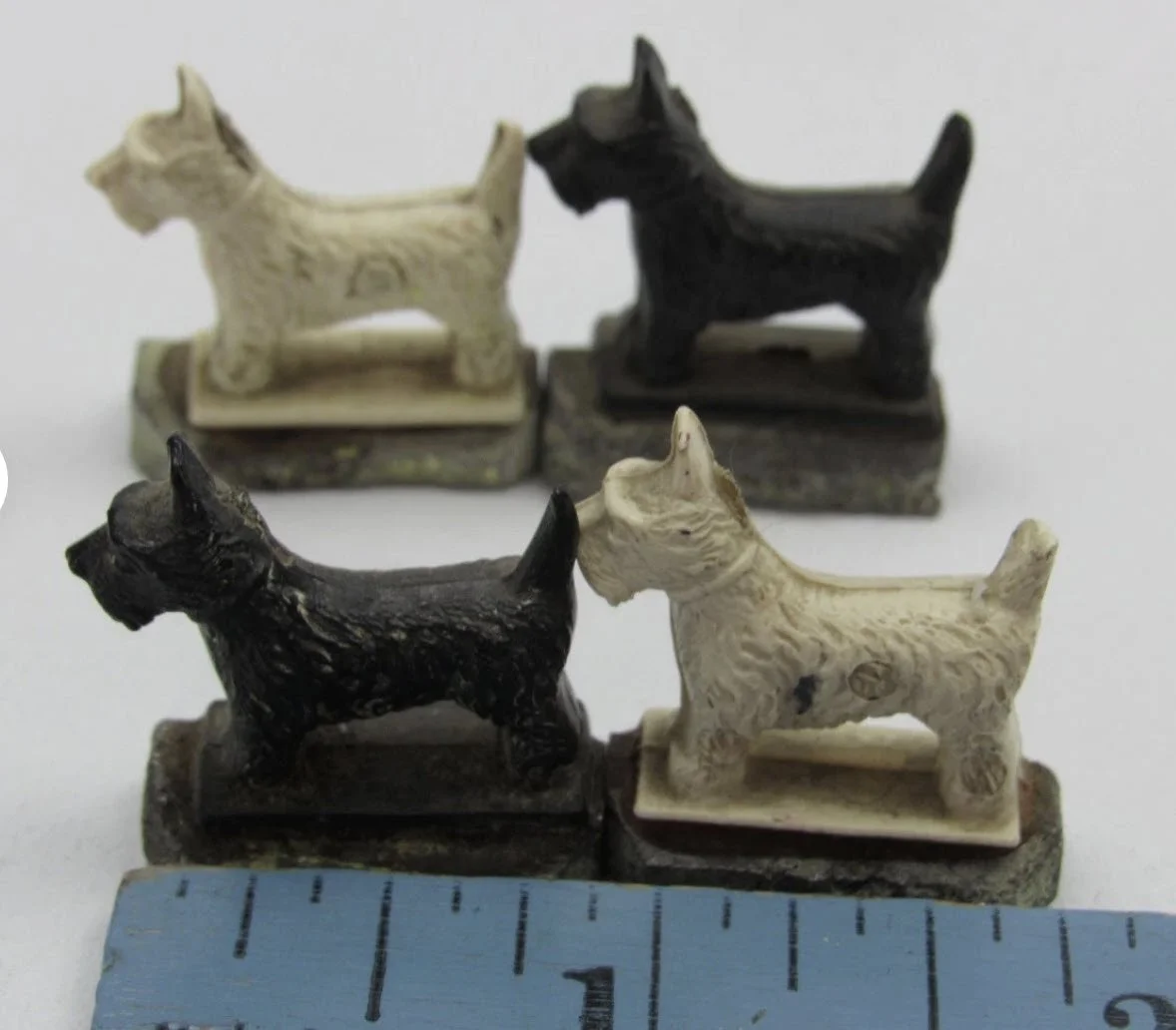
The two brothers were like magnets with the same polarity: they approached each other, pushed against each other, and were then flung apart again. —page 142
—I wouldn’t have thought of the word “polarity” to describe two magnets repelling each other. And this made me remember an old toy we had when I was a kid, two little magnets shaped like scotty dogs that had the same polarity, so you could get them to push each other apart.
Nils Vik begins to sing. The boy with the guitar plays, and Nils falls in with the song. He sings. Because there cannot be silence here. Silence wants something from us, demands something of us. —page 160
—Silence demands something…And here they come. Here come all of them. No one can stop the dead, they come from the forest and the undergrowth, they come on foot, they come by bus, they come in taxis, they hang in mid-air above his boat, they become visible in the lantern light. The night boat fills with the dead. —page 160
Aren’t these beautiful?! They glimmer on the page.
I liked the description of a rift in the community. During the ‘60’s, Marta organized some marches and events to protest the Vietnam War. Nils was not so sure about it. After a get-together with the other organizers:
Do you think it helps? he asked.
What? she replied.
Sitting on a sofa, smoking and drinking and putting the world to rights.
Probably not, but maybe it’ll be a bit easier to live with ourselves if we speak up, show some resistance, don’t you think?
Fine - you can be an idealist if you like, but I’m a realist. —pages 109, 110
He worried, too, because Marta and another organizer were attracted to each other, and he was afraid his job might be affected. After a march through the town led by his wife, he was proved right:
…the old priest [who Nils ferried to the churches along the fjord] called to inform Nils Vik that he could no longer employ him as a ferryman. While he had no complaints about the job Nils had done, terminating their arrangement would be in the best interest of both parties. He offered Nils his sincerest thanks for all his efforts.
May I ask if this is about my wife? Nils asked.
No, it’s based on an overall assessment, the priest said. We’re seeing many tendencies to dissolution around us at the present, including locally.
Then:
All those who might have replaced Nils began to call each other up, and agreed they wouldn’t ferry these officials around the fjord either. The priest would just have to grab his oars and row himself over the fjord - the exercise would do him good.
After several Sundays when the churches stood empty:
…the priest called Nils to say that he had perhaps been a little hasty, it appeared they could now return to the old system. Nils replied that, with a heavy heart, he had decided he couldn’t go back to the old system.
Why not? the priest wanted to know.
Well it came down to an overall assessment, Nils said.
Oh?
Yes - and besides, my wife is absolutely right. The Americans need to get the hell out of Vietnam. —Pages 111-113
Delicious, right?!
I enjoyed getting to know Nils and his life. He deeply loved his wife Marta. Everything was not all sweetness and light in their marriage, but the descriptions of their love for each other were wondrous. Small things like Marta hugging Nils from behind, putting her arms around his neck, calling down the stairs to him when he arrived home late at night, “I’m waiting for you to come and warm me up,” and teasing each other. It felt quiet and deep.
When I was nearly finished, I thought, “I don’t want it to end,” but then I thought, “No, the ending will be beautiful. I don’t want to stop being in the story, being with Nils and Luna on the boat, watching the water in the fjord, passing in the shadows of the mountain sides, feeling the sun in the sky, breathing the salt in the air.”
Read the book for a reading experience that feels like a delightful ride down a beautiful, mountain-lined fjord.
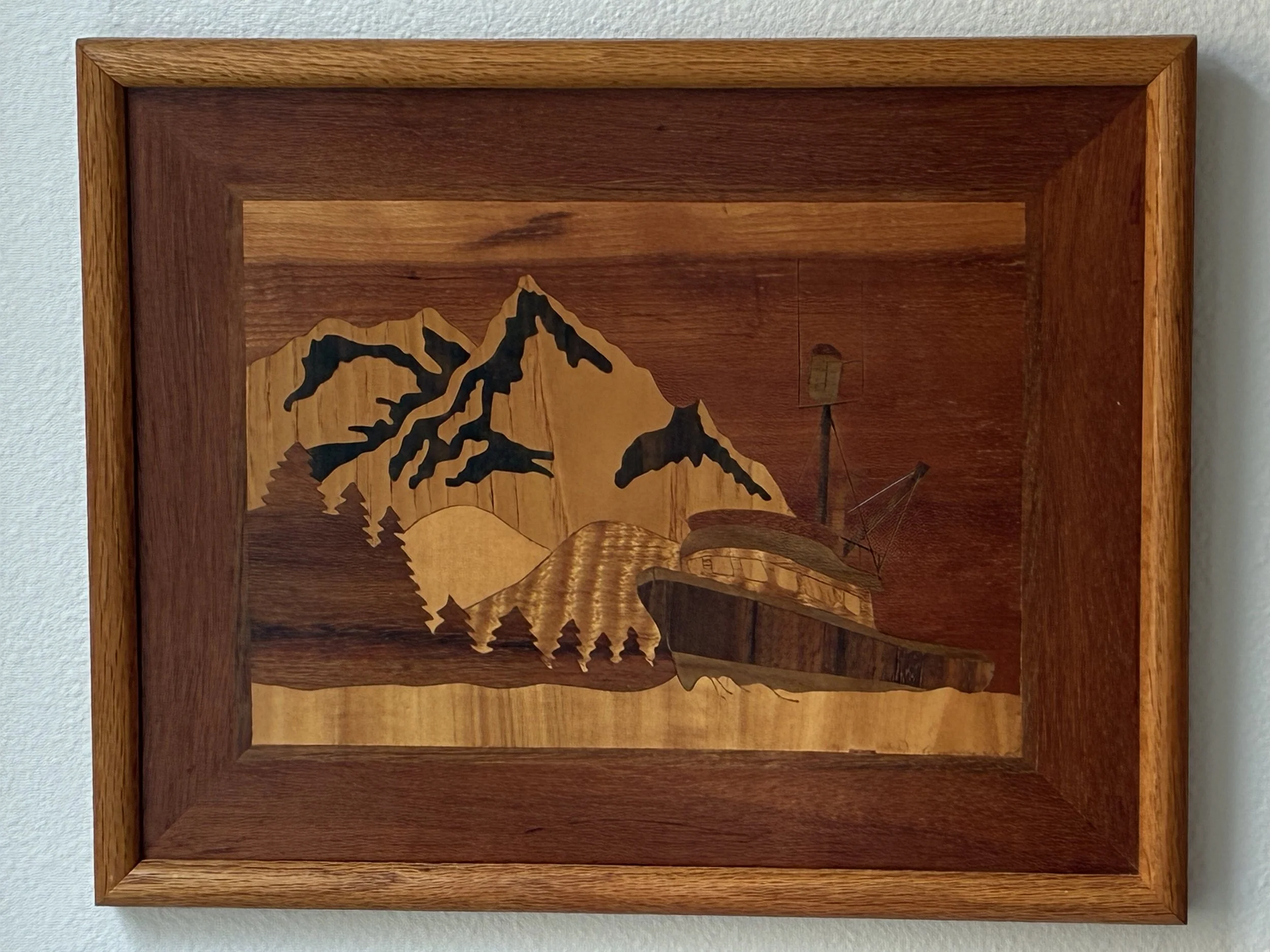
Shortly after I finished the book, Randy found this inlaid wood picture at a secondhand store. It reminded me of The Ferryman and His Wife. I have a couple pictures that evoke books I have read. It warms my heart to look at them and remember the book like a beloved friend.