Regret and Forgiveness
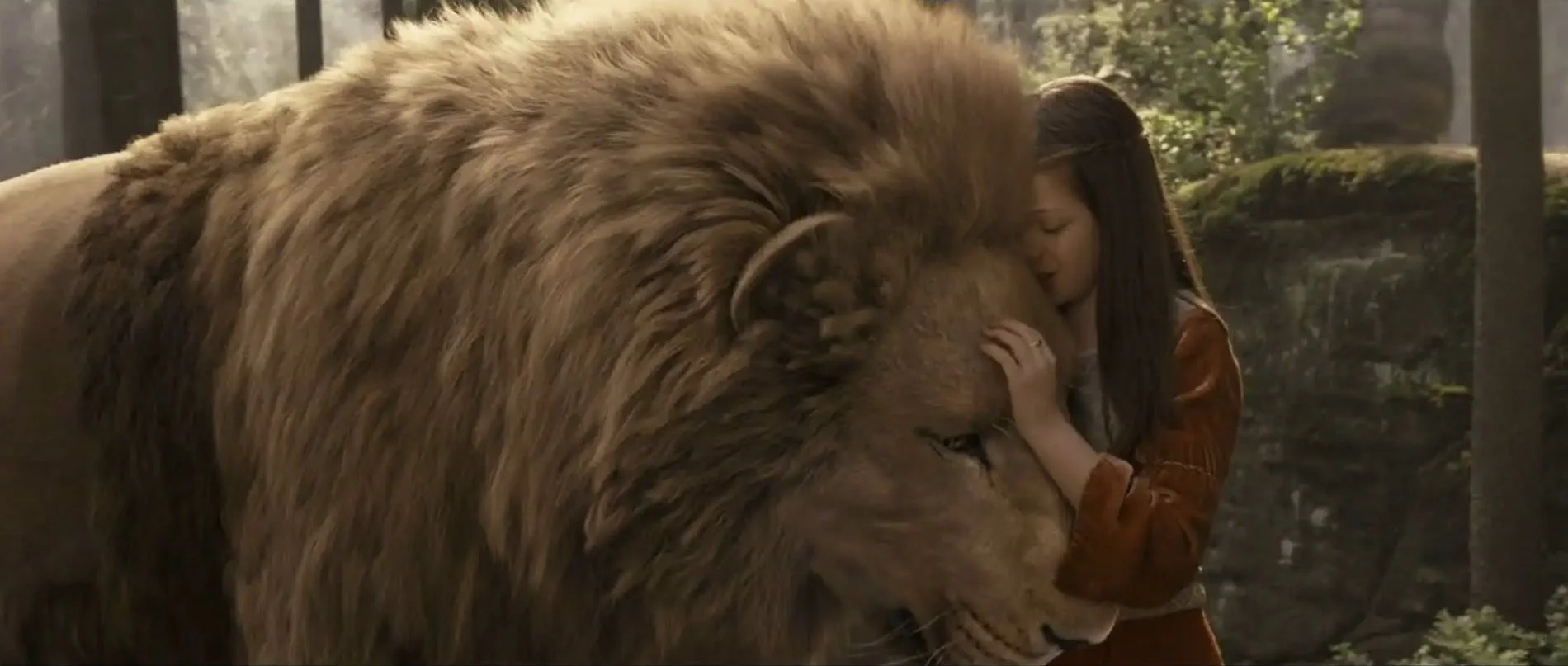
Aslan and Lucy, from the movie
I have been thinking a lot about regret and the concept of forgiving myself. I have done and said things I later regret—and by later, sometimes I mean immediately after! Oh, how I wish I had not said that. I wish I could stuff the words back into my brain and not let them out of my mouth. I wish I could run the moments backwards like a movie and play the whole scene out differently. Does forgiving myself mean accepting the regret as something I will have forever?
I almost titled this blog entry “Regrets, I Had a Few,” from the song “My Way” by Frank Sinatra. But in that song, he goes on to sing, “…too few to mention” and lauds his own lifetime of doing everything his way. That is not true for me. Unfortunately, I cannot say I only have a few regrets. Many nights, I have lain in bed playing and re-playing the words or actions of that day over and over. Crucifying myself, I call it. I say to myself what I say to others, “If your best friend had done/said what you did, what would you think?” I remember that God forgives me. But still, that shame and regret do not go away.
You’re “supposed to” forgive yourself. But often I don’t feel like I can. Then I think about just accepting the regret like: “OK, you regret what you did. Now accept it. You wish you hadn’t done it, but you can’t change it now, so accept that you will regret it forever.” Is there any peace in accepting regret? Is accepting regret the same as forgiving yourself?
This morning, I sat and put myself in God's presence. I did not let myself try to figure out how to forgive myself or accept regret. I used my imagination to be with God in my favorite way, which I have written about before—I imagine I am walking on a path as Moses did; I see the burning bush, I go to it, and use all five senses to see, hear, smell, taste, and feel myself in that holy place. As I did that, a scene from the Narnia Chronicles came to mind. (How about that? Something in the Chronicles of Narnia revealed itself to me like a message from God. That never happens. Ha!)
In the book Prince Caspian, Lucy, the youngest child, sees Aslan (the lion who represents God) beckoning her and her siblings to follow him. The problem is that only Lucy can see him. She tells her brothers and sister what she sees, but they don’t believe her. They think she must have been dreaming or something since they have always been able to see Aslan if he’s present. So, they don’t follow Aslan by following Lucy. Later, when she meets Aslan again, she begins to complain that no one believed her, but she realizes that Aslan expected her to follow him alone if she could not persuade her brothers and sister, and that is why this dialogue took place:
“You mean,” said Lucy rather faintly, “that it would have turned out all right—somehow? But how? Please, Aslan! Am I not to know?”
“To know what would have happened, child?” said Aslan, “No. Nobody is ever told that.” (page 137*)
Aslan implied that things would have worked out if Lucy had done what he asked. He tells her no one will know what might have been, “But anyone can find out what will happen.” Then he tells her what to do now—another hard assignment.
So, what is God saying to me when that scene comes to mind? Obviously, I will never know what would have happened if I had not done or said what I regret. Is the message to look to the future and do better, even if it’s hard, rather than looking backward? Is it to atone somehow? How? Is it to set my eyes on Jesus and focus on my relationship with him? Is it all of the above? None of the above? Is God speaking to me? I’ll keep sitting in His presence.
Now, I’ll be honest and tell you what else I imagined, though I am embarrassed and afraid you will think I am weird and going too far with this whole hearing-from-God-with-my-imagination thing. I hope it will encourage you. I imagined I told Jesus everything I regretted and started to cry. I leaned forward, put my head on his chest, and he reached around to the back of my head and hugged me. I cried in his arms for a while.
I’ll end on a note of gratitude and love. This is an “email of God’s love,” after all. I am grateful that God loves me, even when I do stupid or hurtful things. God loves you, too, even when you do stupid or hurtful things.
* Prince Caspian, by C.S. Lewis. Copyright, 1951. Collier Books, Division of Macmillan Publishing Co., Inc.