Marce Catlett: The Force of a Story by Wendell Berry
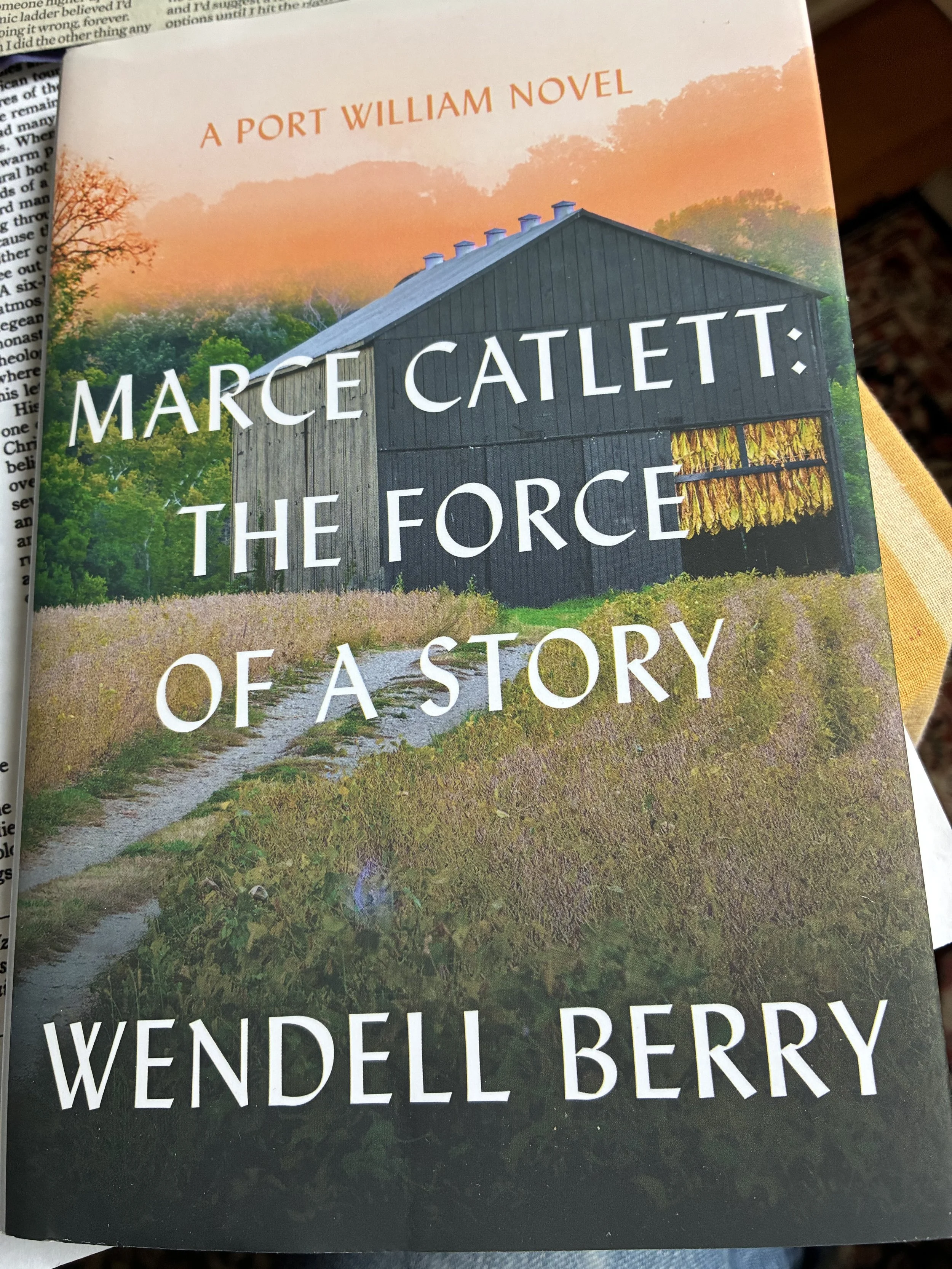
Marce Catlett: The Force of a Story: A Port William Novel- 4*
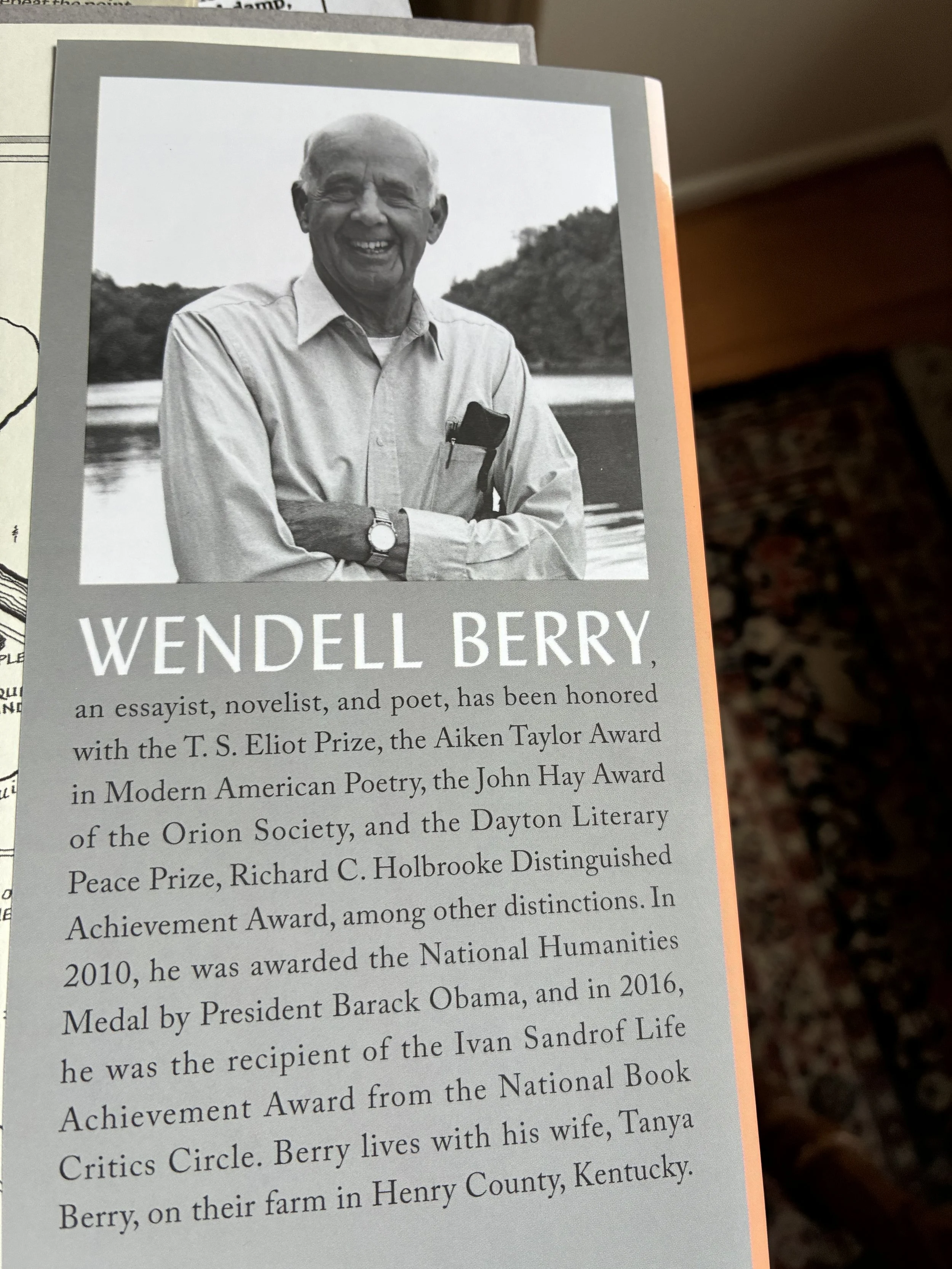
Wendell Berry
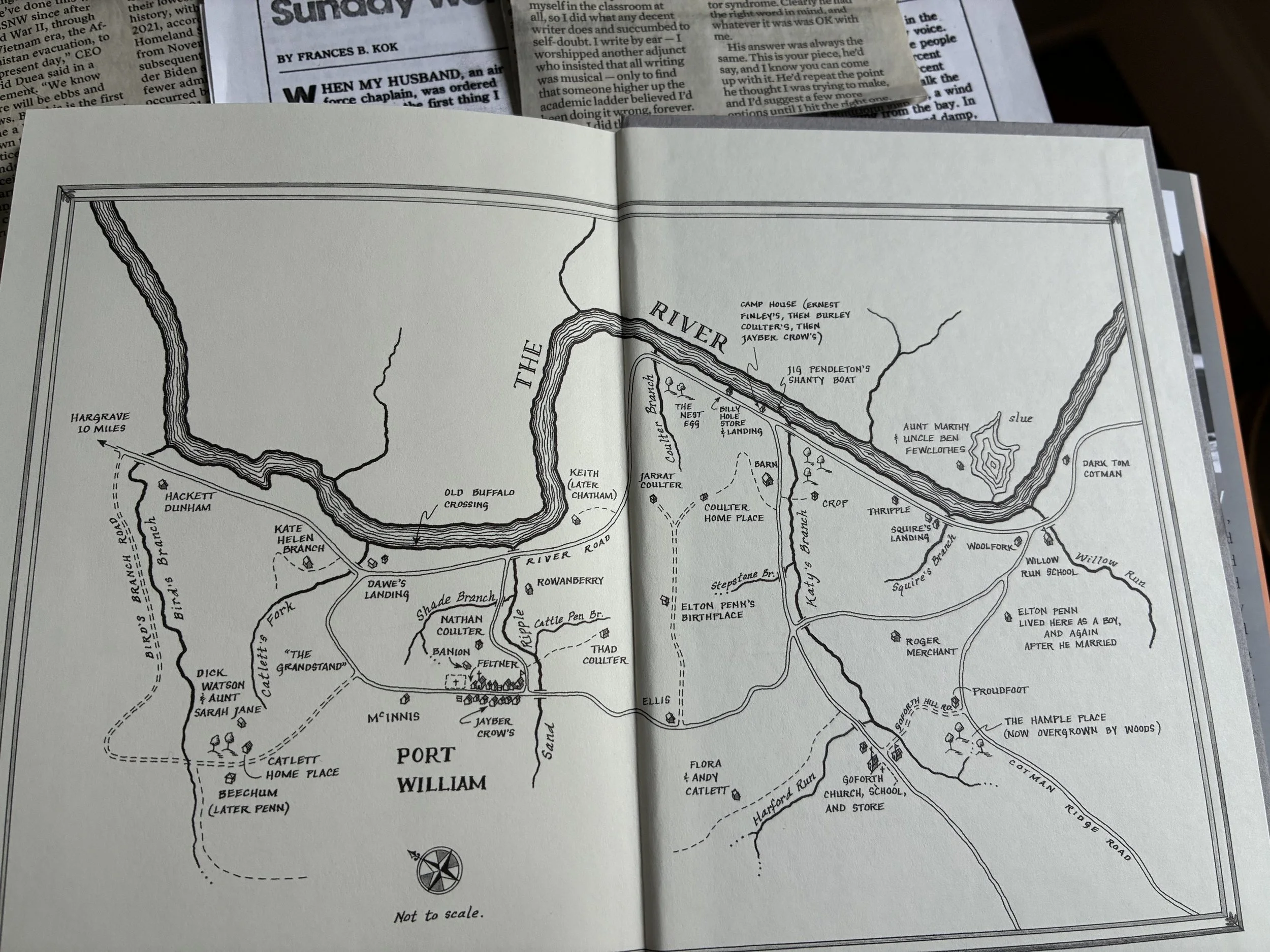
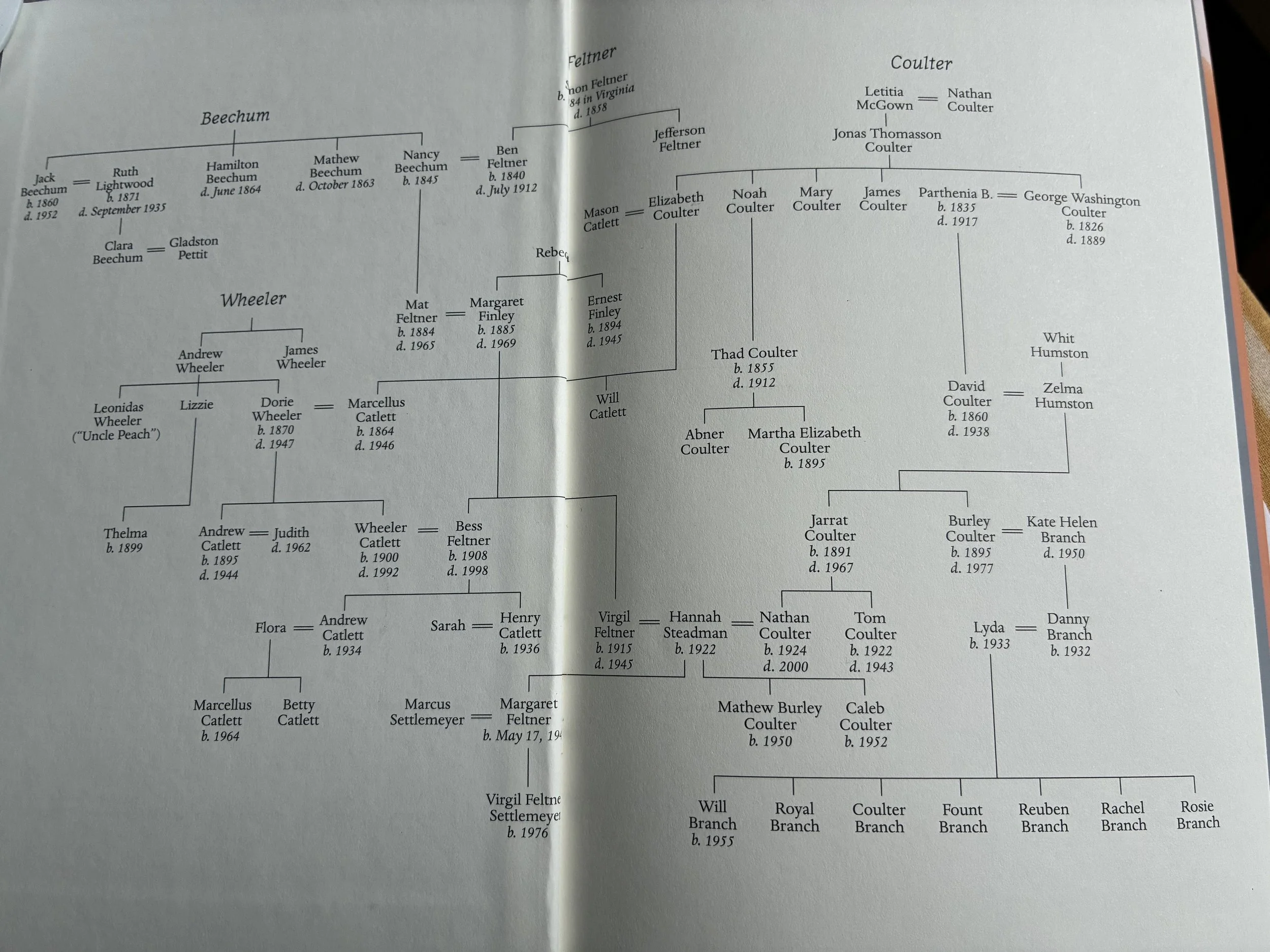
William Berry is one of my heroes. He’s 91 years old and wrote a new book. This one is a novel in the Port William series. Port William is a town in Kentucky modeled after the Kentucky town Berry grew up in. There are many books and short stories set in Port William with the same and related characters. I think I’ve read all, or at least most of them. It’s fun to begin reading and find my old friends in Port William again. It’s kind of like The Chronicles of Narnia in that the time will be varied. You may find the book has a character that was a child in the last book you read and is now an old man, or even dead, and the story is about one of his/her descendants. Nearly all the books have a family tree and a map (below) in the endpapers. I love that!
It seems wrong for me to give one of Wendell Berry’s books a 4-star rating rather than 5, but I felt it was fair because this one had more writings about the subjects Berry is passionate about—big agriculture, machines, factory farming, and their effect on farming and food. A standard piece of advice for writers is, “Show, don’t tell.” It’s been a while since I’ve read a book or story by Berry, but my memory is that they were “just” a story—they showed, not told. From the stories, you could see the results of things like the rise of tractors over horses and the growth of huge farms that produced like factories rather than family farms. You also see the losses our culture and individual lives suffer when reading the story rather than having them explicitly written out.
Besides novels and short stories, Berry writes poetry and has been an activist, writing many treatises and forming and joining political groups to protect farming and a caretaking connection to the land. He talks about membership—being a member of the community, not only a producer and chaser of profit.
The story begins in 1906 with Wheeler as a child waking up to the sound of his father, Marce, riding his horse to the train station, where he will catch the train to the auction in town, where his tobacco crop for the year will be purchased.
The price paid for each year’s crop has been depressed to virtually nothing by the power of a single buyer, James B. Duke. This year is especially grim since the price offered to each grower is less than the expense of bringing the crop to market. A year’s labor is lost. (front book flap)
Near the middle of the book is the story of Andrew Catlett, Marce’s grandson, growing up and working at a farm known as the Crayton place.
In those days the Crayton place was a farm intimately inhabited and worked. It was divided into fields known by name, connected by wagon tracks and footpaths. Some of the field boundaries had grown shaggy with trees and bushes where members of Jake’s Assortment picked raspberries and blackberries for pies and preserves, or simply picked and ate. Large trees presided over places in the fields where grazing animals shaded in the heat of the day, and where people at work sat a while to rest and talk. The hollows were wooded and inhabited by woodland creatures. At work, early in the summers, they drank freely from wet-weather springs, for the age of poisons had as yet only begun to taint the farmland. There were ponds and a large rock-walled pool where boys could swim or fish. The landmarks served also as mindmarks, for they gathered and held the memories of times and events needing to be remembered.
Eventually, as Andy would live to see, this geography of human memory and amenity would be bulldozed clean away from the mere surface of the ground. (page 66)
It is interesting to me to think about how we can have the kind of love of our land Berry describes when we are not farmers, when we are living in a city, town, or suburb. Can we? The way Berry writes about it, it’s not just a love for the land, it’s being a part of the land and the land a part of you. A deep sense of home, a place you live, and a place in your soul. Can we have that outside of a small community like Port William?
When I contemplate that question, I think of the book Blood and Thunder: The Epic Story of Kit Carson and the Conquest of the American West, which I wrote about here. I wrote:
I also thought to myself, if we could do the settling of the West over again, knowing what we know now, what would we do? And not just what would we do, but what if we decided we were going to do it right, and treat the Indians fairly? How would we do it? The Navajo clans ranged around a vast area, moving from one part to another. With settlers coming, that kind of living just really wouldn't work out. How would we fairly and kindly get them to completely change their way of life?
It’s a similar question here. I don’t think it’s reasonable to think we should not have started using tractors, which then led to more and more machinery, big business agriculture, and so on. But there must have been an alternative path we could have taken that would not have resulted in the loss of our deep connection to the land and everything else we’ve lost.
In both situations, my opinion is that the better path would have to have relied on people not giving in to greed. I often say, “Greed makes the world go round.” Don’t get me started.
Like all of Wendell Berry’s books, Marce: The Force of a Story is great. Highly recommend.