Better Ways to Read the Bible by Zach W. Lambert
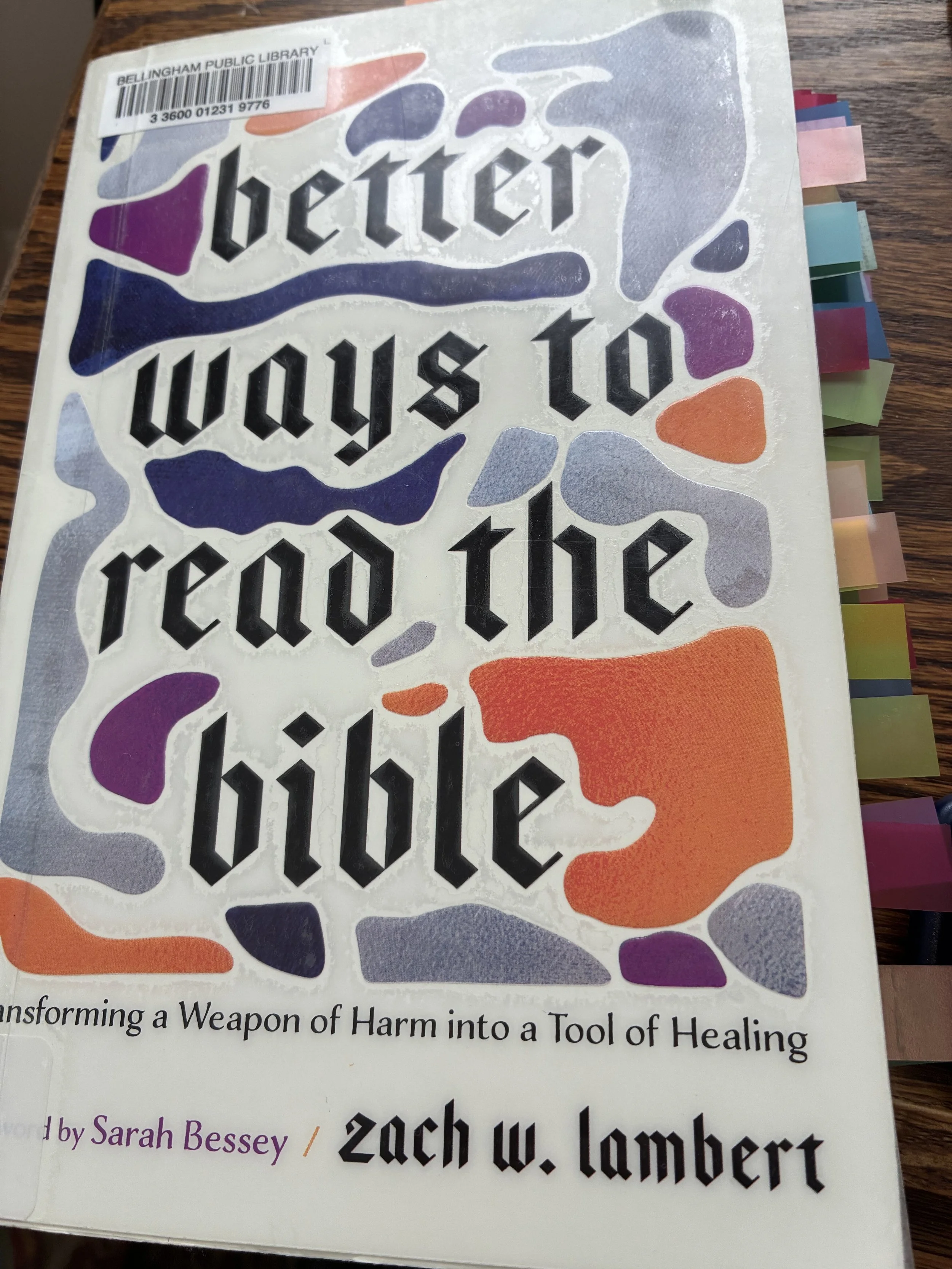
Better Ways to Read the Bible - 5*
Zach W. Lambert
It makes me cringe a bit when people talk about weaponizing the Bible (or weaponizing anything, really). I hate to think of the Bible as a weapon. But I decided to take a look at what this book had to say, and I liked it. A lot.
Lambert uses “lenses” to talk about the Bible — as in the lenses we all wear when we read the Bible: “a set of assumptions about what the Bible is and how it’s supposed to work…that functions like a filter or lens through which the reader attempts to make meaning” —page 7. We apply our lens to everything, really. And it helps to try to be aware of that.
Lambert told some stories about people who had been hurt by others’ use of the words in the Bible. Parents who went to their pastor after their son told them he was gay, and the pastor read them Leviticus 18:22, “You shall not lie with a male as with a woman. It is an abomination.” He told them “they needed to choose between God and their gay son” —page 15. A young man with a Middle Eastern name who, after 9/11, was told by a Christian, “The book of Revelation says Jesus is going to come back and kill everyone who looks like you. After what y’all did to us, I hope it happens soon” —page 14. Like me, you have probably heard, and likely experienced, being hurt by such interpretations of the Scripture.
Lambert shows how we can use Bible verses to prove pretty much anything. I was reminded over and over while reading this book how blessed I was by my dad’s wisdom about the Bible. He (a minister/chaplain) had a deep knowledge of the Bible, and he taught us to understand it not as a science text, a book of right answers, or anything like that. He emphasized looking at the whole Bible and trying to understand its words by using lenses such as Lambert called “lenses that promote healing.” These included the “Jesus lens,” the “context lens,” the “flourishing lens,” and the “fruitfullness lens.” Dad didn’t use those terms, but he taught the concepts.
I heard someone say that if what we hear in church hurts us, then it cannot be the good news that the gospel is. Lambert said:
I started this journey because I came to believe that if our way of interpreting the Bible hurts people, then it must be reconsidered. The way of Jesus always leads to healing, not harm. Better ways to read the Bible exist, ways that lead to restoration, wholeness, and flourishing for all people.
I imagine there are some reading this who are skeptical, perhaps thinking, “But there is right and wrong,” or “Everything we read in the Bible doesn’t make us feel all warm and fuzzy.” That is not Lambert’s angle. He is a student of the Scriptures with a Master of Theology, currently working on a doctorate. He “believes strongly in the power of Jesus working through Scripture to promote wholeness and flourishing in our lives” —page 196.
When Lambert wrote about the problem with the either-or choice of reading every word in the Bible literally or believing the Bible is “made up, antiquated, and useless” —page 17, I thought of this scene in the TV show “West Wing.”
You can see in the photo of the book that I put at the top of this article that I flagged many pages in this book. I can’t decide what to include! I suggest you read it. It’s an easy read. Lambert uses plain language anyone can understand. It’s thorough, too. He discusses everything I can think of that can be problematic or divisive. Things like:
The Bible says it, I believe it, that settles it.
That’s not Biblical.
Submit to authority as you submit to God.
What about hell?
“Go and sin no more.”
Divorce, homosexuality, women’s and men’s roles, moralism, sin
I don’t have a master’s degree or PhD, and I know I have much to learn. I am far from an expert. I have read lots of books over the years about these and other related subjects. In one passage, Lambert lists authors he has drawn upon for this book and I have read books by the majority in the list. Still, I felt I gained understanding and knowledge from Lambert’s book. I think anyone would be enriched by reading Better Ways to Read the Bible.
Lambert ends with this:
I hope this book is a balm. I pray the stories and concepts found in these pages will help you read the Bible in ways that bring healing and wholeness for yourself and your neighbor” —page 197.
This is my prayer, too.